Closing the Quality Loop Before Defects Escape
Traditional quality systems react after defects occur. Discover how AI-native, edge-based execution systems detect drift early and prevent quality escapes in manufacturing.
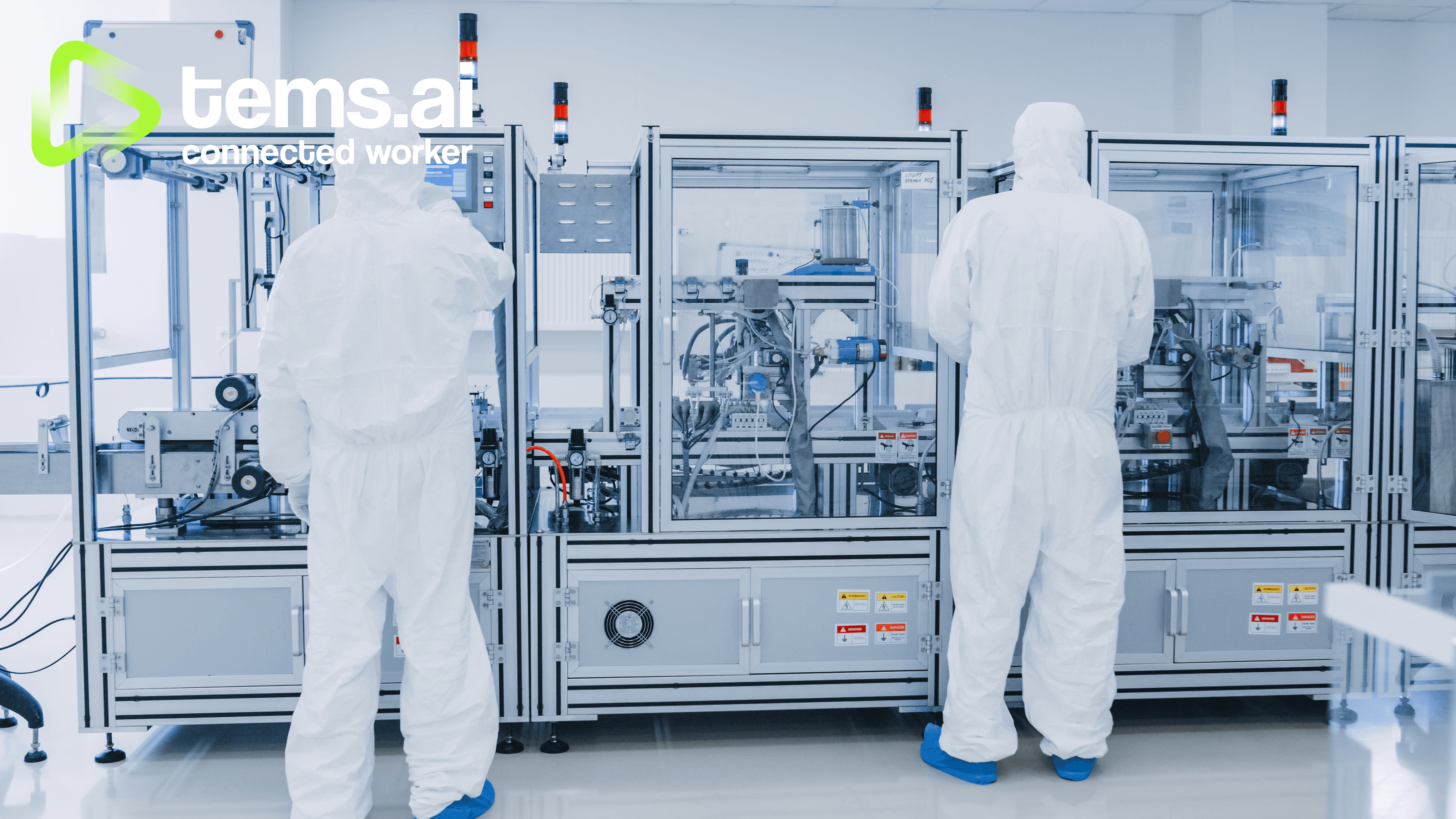
How Edge AI Turns Reactive QA into Predictive Quality Control
Meta Title
AI for Manufacturing Quality Control | Predictive QA & Defect Prevention | TEMS.AI
Meta Description
Traditional quality systems react after defects occur. Discover how AI-native, edge-based execution systems detect drift early and prevent quality escapes in manufacturing.
URL Slug
ai-predictive-quality-control-manufacturing
Introduction: The Cost of Late Detection
In most manufacturing environments, quality systems are reactive by design.
A deviation occurs.
A defect is detected.
A ticket is opened.
Root cause analysis begins.
Corrective action follows after damage has already occurred.
The financial impact includes:
- Scrap and rework
- Downtime
- Customer complaints
- Expedited shipping
- Reputation risk
Quality control that operates after defect creation cannot fully protect margin.
Closing the loop earlier is essential.
The Structural Gap in Traditional QA Systems
Traditional quality assurance relies on:
- Sampling inspections
- Manual checklists
- SPC trend review
- Post-event root cause analysis
While statistically sound, these systems face limitations:
- Detection latency
- Sampling blind spots
- Manual data entry delays
- Disconnection from real-time machine behavior
Quality signals often surface too late.
What "Closing the Loop" Really Means
Closing the quality loop requires:
- Real-time detection of drift
- Immediate contextual intervention
- Automated verification before continuation
- Continuous learning from outcomes
AI-native execution platforms operate within the execution layer rather than after it.
Early Drift Detection with Edge AI
Edge AI processes machine and workflow signals locally, enabling:
- Parameter drift identification
- Abnormal vibration detection
- Pattern deviation recognition
- Escalating micro-adjustment clustering
Instead of waiting for out-of-spec results, the system identifies leading indicators.
Drift is intercepted before it becomes a defect.
Adaptive Digital Checkpoints
Static quality checklists are typically uniform.
AI-native digital checkpoints adapt based on:
- SKU complexity
- Operator skill telemetry
- Recent defect trends
- Environmental variability
High-risk conditions trigger additional verification.
Low-risk conditions maintain efficiency.
Quality enforcement becomes dynamic.
Example: Packaging Line Defect Prevention
A packaging facility experiences intermittent sealing defects.
Traditional approach:
- Inspect every 30 minutes
- Investigate after defect spike
AI-native approach:
- Detect gradual sealing temperature variance
- Identify repeated manual adjustment
- Trigger immediate verification step
- Escalate if threshold persists
Defects are prevented rather than sorted.
Correlating Patterns Across Shifts
Defects often cluster around:
- Shift transitions
- High-SKU variability
- New operator assignments
- Maintenance restarts
AI-native systems correlate:
- Skill telemetry
- Parameter changes
- Environmental conditions
- Escalation frequency
Cross-shift pattern recognition strengthens root cause identification.
Quality Gates Integrated with Execution
AI-native systems embed quality gates directly into workflows:
- Prevent machine restart without validation
- Block progression if critical parameter not verified
- Require digital sign-off
- Record photographic evidence
Quality becomes enforced during execution.
Reducing Quality Escapes
A quality escape occurs when a defect reaches downstream process or customer.
Preventive AI capabilities reduce escapes by:
- Monitoring stabilization period closely
- Detecting abnormal cluster trends
- Highlighting anomaly likelihood
- Triggering containment action immediately
Escapes become rare rather than routine.
Integrating SPC with AI Pattern Recognition
Statistical Process Control (SPC) identifies variance patterns.
AI augments SPC by:
- Detecting subtle multi-variable correlations
- Identifying non-linear drift
- Recognizing behavior-based anomalies
- Learning from historical deviation clusters
This extends beyond traditional control charts.
Financial Impact of Early Intervention
Preventing defects early reduces:
- Scrap cost
- Rework labor
- Downtime
- Customer returns
- Warranty claims
Even minor percentage improvements in first-time-right performance produce significant savings in high-volume operations.
Compliance and Traceability Advantages
AI-native quality systems provide:
- Immutable audit trails
- Timestamped defect containment
- Automated deviation logs
- Electronic signatures
- Version-controlled procedures
Regulatory audits become simpler and more transparent.
Quality and Skill Variability
Inexperienced operators may:
- Over-adjust parameters
- Miss early warning signs
- Delay escalation
AI-native systems adapt instruction depth and guidance based on skill telemetry.
Quality enforcement becomes consistent across experience levels.
From Reactive QA to Predictive Quality
Reactive QA:
- Identifies defects after occurrence
- Focuses on corrective action
Predictive AI quality:
- Identifies leading indicators
- Focuses on prevention
- Automates early containment
The shift is temporal.
Prevention replaces reaction.
Multi-Site Quality Intelligence
Enterprise manufacturers benefit from:
- Cross-site defect pattern comparison
- SKU-specific risk profiling
- Shared learning across plants
AI-native architecture supports centralized intelligence with local execution.
Cultural Implications
When operators see:
- Immediate drift detection
- Clear escalation guidance
- Fewer crisis interventions
Trust in digital systems increases.
Quality becomes proactive rather than punitive.
Enterprise Deployment Strategy
Phase 1:
Digitize critical quality checkpoints.
Phase 2:
Integrate with machine signals and MES.
Phase 3:
Enable real-time anomaly detection.
Phase 4:
Activate predictive pattern modeling.
ROI is measurable within months on targeted lines.
Strategic Questions for Leaders
- How long after drift begins is it detected?
- How often do defects cluster during transitions?
- What percentage of scrap occurs during stabilization?
- Are defect patterns correlated with skill variability?
If detection occurs after damage, loop closure is incomplete.
Conclusion: Quality Is a Timing Problem
Most quality systems are not fundamentally flawed.
They are delayed.
AI-native execution systems shift quality from post-event analysis to pre-event intervention.
The quality loop closes before defects escape.
That is the difference between reactive QA and predictive execution intelligence.
Frequently Asked Questions
What is predictive quality control in manufacturing?
Predictive quality control uses AI to detect early indicators of process drift and prevent defects before they occur.
How does edge AI improve defect prevention?
Edge AI analyzes machine and workflow signals in real time, enabling immediate intervention during abnormal patterns.
Can AI reduce quality escapes?
Yes. By detecting leading indicators and enforcing verification gates, AI prevents defects from reaching downstream processes.
How is predictive QA different from traditional SPC?
AI augments SPC by identifying multi-variable and non-linear patterns that traditional control charts may miss.
Is AI-driven quality suitable for regulated industries?
Yes. AI-native systems provide full traceability, digital audit trails, and electronic documentation aligned with regulatory standards.
Ready to transform your operations?
Book a 30-minute demoRelated articles
Connected Worker 2.0: Why "Another App" Won't Fix Your Factory
Discover why first-generation connected worker apps failed and how AI-native edge platforms transform shop-floor execution, OEE, and quality performance.
Best Practices for Digital Forms and Checklists in Manufacturing
Digital forms and checklists standardize work and capture data in real time. Discover best practices for implementing them effectively on the manufacturing shop floor.

Time Studies Without Stopwatches
Traditional time studies interrupt production and rely on manual observation. Discover how AI-native edge systems measure task duration and bottlenecks automatically in real time.