Kitting Errors Caught Before Assembly
Kitting errors cause scrap, rework, and production delays. Discover how AI-native digital pick lists and edge validation prevent errors before assembly begins.
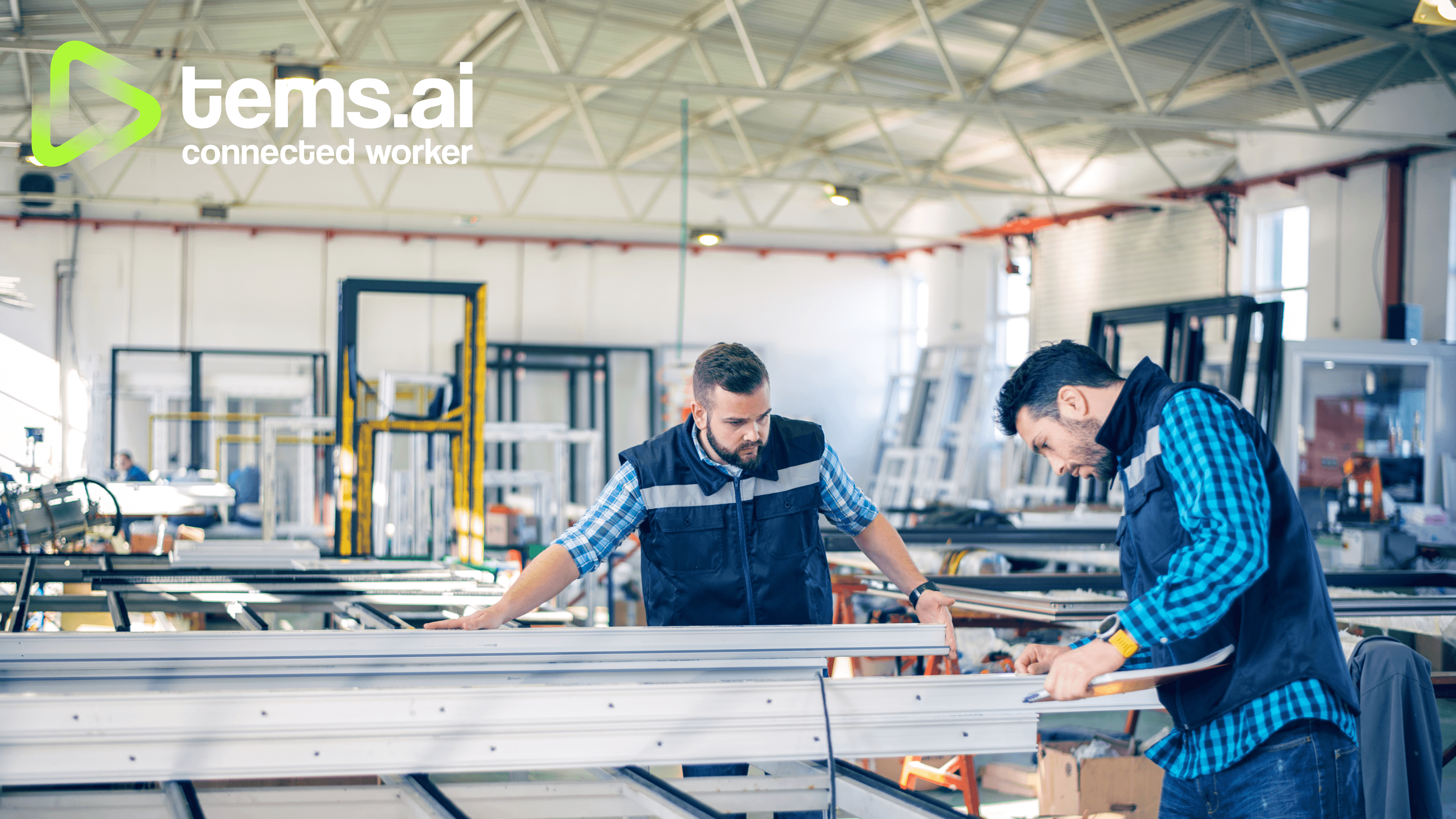
How AI-Native Verification Prevents Costly Downstream Defects
Meta Title
AI for Kitting Accuracy | Prevent Assembly Errors Before They Happen | TEMS.AI
Meta Description
Kitting errors cause scrap, rework, and production delays. Discover how AI-native digital pick lists and edge validation prevent errors before assembly begins.
URL Slug
ai-kitting-error-prevention-manufacturing
Introduction: The Hidden Cost of a Wrong Kit
In many manufacturing environments, assembly defects originate not at the workstation --- but upstream in kitting.
A wrong component.
A missing fastener.
A mislabeled part.
An outdated revision.
The assembly operator discovers the issue too late.
The consequences include:
- Line stoppage
- Rework
- Scrap
- Investigation
- Delivery delay
Kitting errors are small upstream mistakes with large downstream impact.
Preventing them requires intelligence before assembly begins.
Why Kitting Errors Persist
Kitting operations often rely on:
- Printed pick lists
- Manual bin selection
- Visual verification
- Memory-based substitution
High SKU proliferation increases risk:
- Similar-looking components
- Multiple revisions
- Short production runs
- Frequent engineering changes
Human error probability rises with complexity.
Traditional quality gates at assembly are too late.
The Structural Weakness of Manual Pick Lists
Paper or static digital pick lists cannot:
- Verify component identity automatically
- Detect incorrect revision levels
- Block substitution errors
- Cross-check kit completeness in real time
They rely on operator diligence.
In high-volume environments, diligence is insufficient as sole control.
AI-Native Digital Kitting Workflows
TEMS.AI enables intelligent kitting through:
- Digital pick lists synchronized with MES
- Barcode or RFID verification
- Vision-based validation
- SKU-specific configuration logic
- Edge AI anomaly detection
Kits are validated before they reach assembly.
Step-by-Step Intelligent Kitting
A typical AI-enabled kitting process includes:
- Production order integration from MES
- Digital pick list generated automatically
- Component barcode scan required for confirmation
- Real-time cross-check against BOM revision
- Alert if mismatch detected
- Mandatory confirmation before kit closure
This enforces error-proofing at the source.
Example: Automotive Sub-Assembly
An automotive plant produces variant-rich sub-assemblies.
Common historical issues:
- Wrong fastener torque spec
- Incorrect harness revision
- Missing bracket
With AI-native kitting:
- Each component scanned and verified
- Revision cross-checked with ERP master data
- Kit completeness validated automatically
- Exception escalated immediately
Pick errors dropped significantly, reducing assembly disruption.
Vision-Assisted Verification
In environments where scanning is insufficient, edge AI can:
- Validate component presence via camera
- Detect wrong shape or orientation
- Confirm label compliance
- Identify missing items
Vision acts as secondary verification.
Layered validation reduces risk further.
Reducing Downstream Cost Multipliers
A kitting error discovered:
- Before assembly → low cost correction
- During assembly → moderate rework
- After shipment → high recall cost
AI-native validation shifts detection to earliest stage.
Cost exposure decreases dramatically.
Integrating Engineering Changes
Engineering changes are frequent in high-mix production.
Risks include:
- Old revision component picked
- Outdated BOM printed
- Confusion during transition period
AI-native systems:
- Synchronize in real time with ERP
- Update digital pick lists immediately
- Flag obsolete part usage
- Prevent outdated configuration from proceeding
Change management becomes controlled.
Correlating Kitting Errors with SKU Complexity
AI control room integration enables:
- Identification of SKUs with high pick error frequency
- Correlation with changeover timing
- Detection of shift-based variability
Improvement efforts become data-driven.
Workforce Variability and Skill Support
Less experienced material handlers may:
- Misinterpret printed lists
- Overlook revision codes
- Skip verification steps under pressure
AI-native workflows provide:
- Clear digital guidance
- Visual confirmation prompts
- Escalation pathways
- Reduced cognitive burden
Error prevention becomes systematic rather than skill-dependent.
Financial Impact of Kitting Error Prevention
Kitting errors impact:
- Assembly downtime
- Scrap
- Rework labor
- Quality inspection overhead
- Customer delivery performance
Plants implementing AI-native validation often report:
- Significant reduction in pick errors
- Lower rework rates
- Improved line stability
Error prevention yields measurable ROI.
Integration with Digital Travelers
Digital travelers and kitting workflows integrate seamlessly:
- Kit validation logged automatically
- Component traceability linked to batch
- Assembly record includes verified pick data
Traceability strengthens across entire value chain.
Multi-Site Standardization
Enterprise manufacturers benefit from:
- Standardized digital kitting workflows
- Centralized BOM integration
- Cross-site performance comparison
- Unified revision control
Global consistency improves.
Cultural Impact
When assembly operators receive accurate kits consistently:
- Trust in logistics increases
- Downtime decreases
- Friction between departments reduces
AI should reduce blame culture by eliminating preventable errors upstream.
Deployment Roadmap
Phase 1:
Digitize pick lists for high-error SKUs.
Phase 2:
Integrate barcode/RFID verification.
Phase 3:
Enable vision validation for critical components.
Phase 4:
Connect kitting data to control room prioritization.
Incremental rollout delivers rapid gains.
Strategic Questions for Leaders
- How many assembly stoppages originate from kitting errors?
- Are BOM revisions synchronized in real time?
- Can kit completeness be verified automatically?
- Is traceability linked to component pick data?
If errors are discovered at assembly, intelligence is missing upstream.
Conclusion: Error-Proof at the Source
Lean teaches that defects should be prevented at the source.
Kitting is the source of many assembly defects.
AI-native validation:
- Verifies components before assembly
- Synchronizes revisions automatically
- Enforces completeness checks
- Reduces downstream cost
Kits arrive correct.
Assembly flows uninterrupted.
Frequently Asked Questions
What are kitting errors in manufacturing?
Kitting errors occur when incorrect, missing, or outdated components are assembled into production kits.
How does AI prevent kitting errors?
AI verifies components through barcode scanning, vision validation, and BOM cross-checking before assembly.
Can AI reduce assembly downtime?
Yes. By eliminating upstream pick errors, AI reduces assembly interruptions and rework.
How does digital kitting integrate with MES?
Digital pick lists synchronize with MES production orders and ERP BOM data in real time.
Does AI improve traceability in kitting?
Yes. Every verified component is logged and linked to production records, strengthening end-to-end traceability.
Ready to transform your operations?
Book a 30-minute demoRelated articles
Connected Worker 2.0: Why "Another App" Won't Fix Your Factory
Discover why first-generation connected worker apps failed and how AI-native edge platforms transform shop-floor execution, OEE, and quality performance.
Best Practices for Digital Forms and Checklists in Manufacturing
Digital forms and checklists standardize work and capture data in real time. Discover best practices for implementing them effectively on the manufacturing shop floor.

Time Studies Without Stopwatches
Traditional time studies interrupt production and rely on manual observation. Discover how AI-native edge systems measure task duration and bottlenecks automatically in real time.